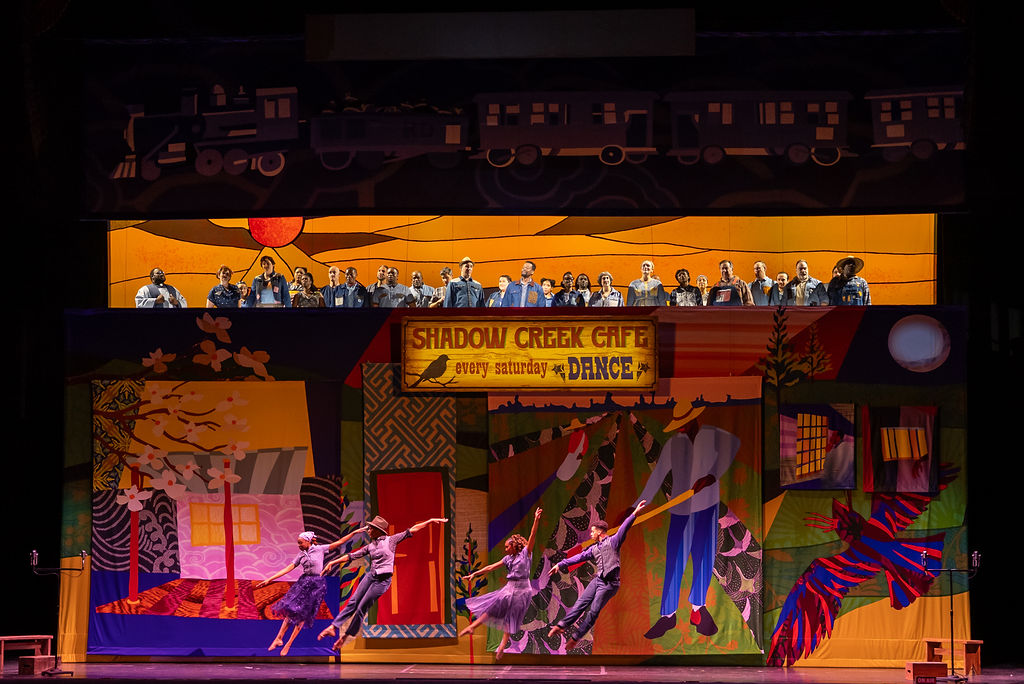
“Detroit is an American city, which in spite of sheaths of exposed corruption nationally, in spite of a return to a wealth disparity the USA has not seen since the Gilded Age, somehow – this American city, which has paid for corporate greed like no other – somehow, the love of an America where a honest person can make and honest wage and take care of a family, the belief in that dream continues. Businesses gather and pool resources to collectively support decent wages for employees in service industries, construction, warehouses, and factory jobs. It is a gobsmacking faith in a dream people saw shredded before their own eyes.
The history of classical music has been ‘class washed’, as if it were a form made by the rich for the rich. Patronage has always been the fundamental backbone of Western arts – yes, and much of 19th century music was paid for by wealthy elites. However, cultural innovation has always come from margins. Brahms lived in a slum. Beethoven’s family was destitute, and his father was in and out of jail. Haydn was a self-taught peasant. Bach an orphan.
The stories that parade across opera house stages are rife with class struggle (and often not so subtle mockery of the ruling class). Opera houses are places big enough for the epic struggle of everyday life, for the violence, heroics, and love it takes to survive this world.
Like HIGHWAY 1, USA, DOWN IN THE VALLEY tells the story of working people. Kurt Weill believed in his music reaching many people. The piece was originally composed for radio to gather expansive audiences. He was dedicated to Arts-in-Education, and this opera was performed hundreds of times (I believe it’s actually thousands) in schools across the country.
I believe in the dreaming capacities of all audiences. Our hunger to synthesize the abstract, enjoy the hybrid, the ways in which excellent music is part of everyone’s DNA. Yuval Sharon and Detroit Opera have partnered with me like no other institution for the tinkering, complex, at times Sisyphean, task of inviting audiences to opera who have historically been uninvited for generations. It is long term work. It is detailed. It lives between the macro systems of false democracy, of city planning, and the hyper local realities of school schedules, gas prices, and one-on-one conversation. This is a critical part of my practice. My second project with Detroit Opera is a unique chance to build on our past success inviting new audiences and an opportunity for me to expand this part of my work through an in-depth partnership.
Still and Weill are two men who understood margins well. Both knew more than their share about exile. Both cared deeply for Americans, all Americans. To sing this music in Detroit, a place where there is still an ember of faith in a sober American Dream, not the gilded lies of the past, but a mighty and golden belief in the wellness of all — my god, what better prayer for 2025 — than to sing this music in this city! To ensure the class diversity inherent to a sober American Dream is represented in the audience. That we gather a representative public. That we use this form well, which at its greatest is a model for participatory society.
To feel patriotic in 2025 is precious and precarious for all Americans. When I think of this music, when I think of the mighty American city of Detroit – with sincerity, I come to serve my country.”
-Kaneza Schaal
CAST & CREATIVE TEAM
Music by Kurt Weill
Directed by Kaneza Schaal
Conducted by Roberto Kalb
Production Design by Christopher Myers
Lighting by Pablo Santiago Costumes by Charlese Antoinette Jones
Scenic by Amy Rubin
Choreography by Kiara Benn
Fight choreography by Jen Pan
Sound design by Stephanie Farina
PERFORMANCES
Detroit Opera, December 7-13, 2025
PRESS
Kaneza Schaal on Arts Engines with Aaron Dworkin
Is Black Art Inherently Political? Davóne Tines Has Thoughts
PHOTO
Austin Richey